

Why don't I feel like training, and what can I do about it?

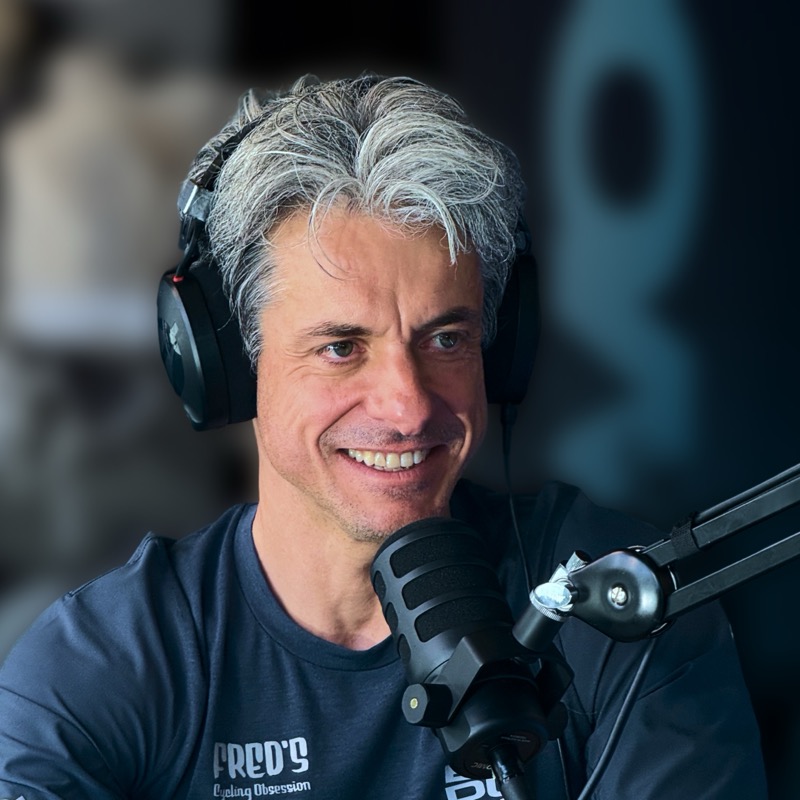
Creator of «La Obsesión Ciclista de Fred», the most-listened Spanish-language cycling podcast (6M+ plays). 20+ years building technology, much of it for sport.
Prepared by the FredCoach science team, AI-assisted, from the cited sources · Sport psychologist
In short. Going through days or weeks without wanting to train is normal and is rarely laziness: motivation rises and falls with work, sleep, family and what the bike means to you. What the research supports best is training for reasons of your own (not out of guilt), deciding in advance when and where you will ride and, above all, getting back to it after a missed day without punishing yourself. If the lack of drive lasts for weeks and spreads to everything, not just cycling, it is no longer a training issue and it is worth talking to a professional.
One flat day doesn't make you an inconsistent rider
You get home at eight, the bike is staring at you from the corner and you could not want it less. The useful question is not "why am I so lazy?" but what has changed: bad nights, a heavy week at work, a goal now behind you, or a bike that has become a chore.
Consistency doesn't break in a day. In a study that followed 96 people for twelve weeks as they tried to turn a daily eating, drinking or activity behaviour into a habit, missing a single day did not derail the process. It is a small study, not repeated and not done with cyclists, but it points to something reassuring: the trend counts, not the odd day.
Why you ride matters more than willpower
The best-supported idea about what keeps people exercising comes from self-determination theory: training because you enjoy it or value what it gives you is not the same as training out of guilt, pressure or to avoid feeling bad.
A review of 66 studies consistently found that motivation that comes from you is linked to doing more exercise, and that enjoying it tends to be the better predictor of sticking with it over the long run. These are mostly associations in the general population, not trials with cyclists. A meta-analysis of 73 health studies found that programmes supporting that kind of motivation (having a say, feeling you improve, feeling supported) improve behaviour somewhat, with small-to-medium effects; motivation driven by obligation or guilt was not linked to better behaviour.
In practice: if you are only heading out today to tick a box, ask yourself what you loved about riding when you started. A ride with friends and no watch counts as training too.
Decide when and where, not whether
One of the best-studied techniques for following through is very simple: decide the when, where and how in advance, as an "if this happens, I will do that" plan. For example: "on Tuesday, when I get home from work, I get changed before I sit down and do an hour on the trainer." A meta-analysis of 94 tests found a medium-to-large effect on reaching the goal. They covered all kinds of goals in the general population, not cyclists: a tool proven in general, not measured on the bike.
It works because it takes the decision away from the moment you are tired: following what you decided on Sunday is easier than bargaining with yourself.
After a missed day, the useful thing is to get back to the plan
In an experiment with 61,293 members of a US gym chain, thirty scientists tested 54 four-week programmes to get people to work out more. Almost half increased visits, by 9% to 27%, and the one that worked best gave small rewards for something specific: coming back after missing a workout. The honest part: these were gym members, not cyclists; only 8% of the programmes left a measurable effect once they ended, and not even experts could predict which ones would work.
What you can take from it: after a missed day you don't need to make up for it or double the session; just get back to the plan.
Lower the bar for the day, not for the season
Many sport psychologists suggest a minimum version: get changed and ride for twenty minutes, with permission to stop there. It is common practice, not something that has been measured, but often, once you are rolling, you keep going; and if not, you have kept the habit alive.
Changing the goal for the day helps too. In sport, process goals (what you control: doing the session, holding your cadence, fuelling well on the long ride) improved performance more than outcome goals in a meta-analysis of 27 studies, though with few studies of each type. Variety matters as well: in a six-week trial with 121 inactive university students, a programme that felt varied produced somewhat better adherence than a repetitive one. A new route or new company can help.
When low motivation is actually burnout
A dip is not the same as athlete burnout. Researchers describe burnout as three things at once: physical and emotional exhaustion, a sense that you achieve nothing however much you train, and no longer caring about the sport. All three together is not laziness.
Burnout doesn't arrive overnight: it builds with heavy load and little rest, high expectations, little freedom to decide and the sport becoming your whole identity. A meta-analysis of 43 studies (across work, sport and education) found that fear of mistakes and the feeling that nothing is ever enough are strongly linked to burnout, whereas setting high standards on its own is not. Easing the load for a few weeks, riding for fun and letting go of comparisons usually help.
When it is more than a lack of motivation
A meta-analysis of 54 studies with nearly 14,000 athletes found burnout goes hand in hand with more symptoms of depression, anxiety and insomnia (an association: it does not show what causes what). If the lack of drive lasts for weeks, if you no longer enjoy things you used to like (not just the bike), if you sleep badly night after night or it is getting in the way of work and the people close to you, talk to your doctor or a psychologist. Symptoms of anxiety and depression are common in athletes too, they can be treated, and asking for help is part of looking after yourself. And if you ever think about harming yourself, don't wait: contact your local emergency number or crisis line.

FAQ
Is it a problem if I skip a workout?
No. In a study of how habits form, missing once did not derail the process. What matters is getting back to the plan, without trying to make up for it.
How long does it take to make training a habit?
It varies a lot: in a small study, repeating something daily in the same context (for example, after breakfast), habits took between 18 and 254 days to settle.
Should I train even when I don't feel like it?
Try a minimum version, twenty minutes with permission to stop, and see how you feel. If you have gone several days in a row without motivation and you are also tired, your body may be asking for rest, and an easy day or a day off is part of the plan too.
How do I know if I'm burnt out on cycling?
If physical and emotional exhaustion, a sense of getting nowhere however much you train and no longer caring about riding all come together, it may be burnout. Ease the load, ride for fun and, if it lasts for weeks or affects everything, see a professional.
Sources
- Lally P, van Jaarsveld CHM, Potts HWW, Wardle J (2010). How are habits formed: modelling habit formation in the real world. European Journal of Social Psychology 40(6):998–1009 (en línea 2009) · doi
- Teixeira PJ, Carraça EV, Markland D, Silva MN, Ryan RM (2012). Exercise, physical activity, and self-determination theory: a systematic review. International Journal of Behavioral Nutrition and Physical Activity 9:78 · doi
- Ntoumanis N, Ng JYY, Prestwich A, Quested E, Hancox JE, Thøgersen-Ntoumani C, et al. (2021). A meta-analysis of self-determination theory-informed intervention studies in the health domain: effects on motivation, health behavior, physical, and psychological health. Health Psychology Review 15(2):214–244 (en línea 2020) · doi
- Gollwitzer PM, Sheeran P (2006). Implementation intentions and goal achievement: a meta-analysis of effects and processes. Advances in Experimental Social Psychology 38:69–119 · doi
- Milkman KL, Gromet D, Ho H, Kay JS, Lee TW, Pandiloski P, et al. (2021). Megastudies improve the impact of applied behavioural science. Nature 600:478–483 · doi
- Williamson O, Swann C, Bennett KJM, Bird MD, Goddard SG, Schweickle MJ, et al. (2022). The performance and psychological effects of goal setting in sport: a systematic review and meta-analysis. International Review of Sport and Exercise Psychology 17(2):1050–1078 · doi
- Sylvester BD, Standage M, McEwan D, Wolf SA, Lubans DR, Eather N, et al. (2016). Variety support and exercise adherence behavior: experimental and mediating effects. Journal of Behavioral Medicine 39(2):214–224 (en línea 2015) · doi
- Raedeke TD, Smith AL (2001). Development and preliminary validation of an athlete burnout measure. Journal of Sport and Exercise Psychology 23(4):281–306 · doi
- Gustafsson H, Kenttä G, Hassmén P (2011). Athlete burnout: an integrated model and future research directions. International Review of Sport and Exercise Psychology 4(1):3–24 · doi
- Hill AP, Curran T (2016). Multidimensional perfectionism and burnout: a meta-analysis. Personality and Social Psychology Review 20(3):269–288 · doi
- Glandorf HL, Madigan DJ, Kavanagh O, Mallinson-Howard SH (2023). Mental and physical health outcomes of burnout in athletes: a systematic review and meta-analysis. International Review of Sport and Exercise Psychology 18(1):372–416 (en línea 2023) · doi
- Gouttebarge V, Castaldelli-Maia JM, Gorczynski P, Hainline B, Hitchcock ME, Kerkhoffs GM, et al. (2019). Occurrence of mental health symptoms and disorders in current and former elite athletes: a systematic review and meta-analysis. British Journal of Sports Medicine 53(11):700–706 · doi
- Reardon CL, Hainline B, Aron CM, Baron D, Baum AL, Bindra A, et al. (2019). Mental health in elite athletes: International Olympic Committee consensus statement (2019). British Journal of Sports Medicine 53(11):667–699 · doi
- Ministerio de Sanidad (2026). 024. Línea de atención a la conducta suicida. sanidad.gob.es · enlace